Call (0115) 931 51 71 to talk to us about your situation
Barratts Legal
  • Twitter
  • Mail
  • Facebook
  • Welcome
  • Why Choose Us?
    • Who We Are
    • Our Approach
    • Our Team
    • Case Studies
    • News
    • FAQs
  • Clinical Negligence
    • Clinical Negligence Team
    • Case Studies
      • Birth injuries Case Studies
      • Brain Injury Case Studies
      • Misdiagnosis and Missed Diagnosis Case Studies
      • Surgical and Orthopaedic Errors Case Studies
      • DVT and Vascular Case Studies
    • Related News
    • Related Links
    • Birth Injuries
    • Spinal Injuries
    • Diagnosis Errors
    • Inquests
    • Funding Your Claim
  • Personal Injury
    • Personal Injury Team
    • Case studies
      • Spinal Injuries Case Studies
      • Brain Injury Case Studies
      • Road Traffic Accident Injury Case Studies
      • Workplace Injuries Case Studies
      • Industrial Disease Case Studies
      • Orthopaedic Injuries Case Studies
      • Mental Health Case Studies
    • Related News
    • Related Links
    • Head Injury
    • Subtle Brain Injury
    • Spinal Injuries
    • Inquests
    • Funding Your Claim
  • Criminal Injury Compensation
    • Criminal Injury Compensation Team
    • How we can help
    • Case studies
    • Spinal Injuries
    • Head Injury
    • Subtle Brain Injury
    • Funding
    • Inquests
  • Court of Protection
    • Court of Protection Team
    • The Work of a Deputy
    • Case Studies
    • Funding
  • Fatal Claims & Inquests
    • Inquests Team
    • The Inquest Process
    • Case Studies
      • Inquests Case Studies
      • Fatal Claims Case Studies
    • Funding
  • Contact
  • Menu Menu

Maternity Safety in England: What National Investigations Show and What Families Need to Know

December 11, 2025/in Clinical Negligence News, Frontpage News

Informed by Barratts’ decades of specialist experience supporting families

Update: 23rd January 2026
Barratts’ response to recent national reviews and lived experiences 

Since this article was published, there has been renewed national attention on maternity safety in England, prompted by both official reviews and extensive media reporting.

Public voices and lived experience

This month Sky News aired a special programme bringing together the experiences of women and families who describe traumatic maternity care.

The accounts shared publicly reflect recurring themes seen across national investigations:

  • concerns being dismissed or minimised
  • delays in recognising serious deterioration
  • lack of empathy following baby loss or serious harm
  • long-term physical and psychological consequences for mothers and families

Many contributors describe the lasting impact of these experiences on their health, family life and ability to work, years after giving birth.

While individual stories are deeply personal, their consistency reinforces what multiple inquiries have already found: the same safety and culture issues continue to arise across different services and over time.

Why this matters

Taken together, the interim review findings and recent media coverage, including Sky News, underline a central point: despite repeated investigations, harm continues to occur in ways that families recognise as preventable.

For many parents, the most distressing aspect is not only what happened, but:

  • feeling unheard
  • not receiving clear explanations
  • and experiencing a lack of openness or accountability afterwards

Understanding these national patterns can help families make sense of their own experiences and why so many people report similar concerns.

Our approach

At Barratts, we are closely following these developments as part of our wider focus on serious injury and clinical negligence, including birth injury and maternity-related harm.

This article will continue to be updated as further national findings are published.

If you or your family have been affected by maternity care and would like clear, honest information, you can speak with a senior lawyer, like Alison Brooks, as part of our free initial conversation.

Understanding Maternity Safety in England: What National Investigations Reveal and Why Families’ Experiences Matter

For more than 30 years, we have supported families affected by serious failings in maternity and neonatal care across England. In that time, we have heard remarkably consistent experiences: parents who felt something was wrong but were not fully heard; delays in care; unanswered questions after traumatic events; and difficulties understanding what investigations meant for their family.

The interim findings from the National Maternity and Neonatal Investigation – widely covered by the BBC this week – bring these issues back into public focus. The accounts described in the report are deeply distressing: women left without basic support, delays in responding to warning signs, and discriminatory experiences among Black, Asian and working-class women.

Many families reading this may feel unsettled or unsure what this means for them personally. Others may be encountering this information for the first time.

This article brings together the key themes that appear across national investigations over the past decade. Our intention is not to overwhelm, but to help families see the bigger picture – and to understand how this week’s findings fit into what many parents have been raising quietly for years. Alison Brooks spoke at a recent conference with other clinical negligence solicitors and asked why lessons are still not learned from errors made. No-one seems to have the answer; we welcome reviews that might help to change this and avoid future negligence claims which are so devastating for affected families.

In Brief: Key Themes Seen Across National Maternity Investigations

  • National investigations over more than 10 years – including Morecambe Bay, Shrewsbury & Telford, East Kent, Nottingham, Leeds and now the Amos Review – show recurring patterns of maternity safety concerns.
  • Repeated themes include families not being listened to, escalation delays, inequalities in care, and inconsistent investigation processes.
  • These are system-level issues, not reflections of any individual family’s actions.
  • Many parents feel unsure before seeking help; that uncertainty is normal.
  • Barratts offers a free, confidential conversation with a senior lawyer, with no pressure and no obligation.
  • Our decades of experience means we can review records and documents to let you know if there may be a negligence claim and give you choices to decide what is best for you.

Why These Findings Matter for Families Today

National reviews, regulatory reports and inquiries highlight four recurring themes. Under each, we share insights based on our specialist experience supporting families.

Theme 1: Families Not Feeling Fully Heard

What National Investigations Consistently Report

Across multiple public reviews, parents describe raising concerns that were not fully acknowledged or acted upon. Examples come from inquiries such as Ockenden, East Kent, Nottingham Review and interim findings from the current National Maternity and Neonatal Investigation.

What Families Often Say

Parents frequently describe:

  • Sensing something was wrong but struggling to get attention

  • Not being taken seriously and instincts being undermined

  • Feeling that they were in the wrong when raising warnings

This emotional labour – having to self-advocate in vulnerable moments – is a common theme across public reports.

Why This Happens at System Level

Public inquiries often describe:

  • Communication breakdowns

  • Overstretched teams

  • Hesitancy to escalate concerns

  • Unclear roles during busy periods

These are system issues which need to be addressed.

Theme 2: Delays in Escalation and Missed Warning Signs

What Investigations Highlight

Reports including Shrewsbury & Telford, East Kent, MBRRACE maternal deaths and the Amos interim findings repeatedly describe challenges in recognising or acting on signs that required clinical escalation.

Common Questions Families Ask

Families often wonder:

  • “Should someone have noticed earlier?”

  • “Is this something that happens often?”

  • “Was it just a series of events that built up?”

We speak to many parents who are asking themselves these same questions and we help them to get the answers they need.

System Insight

Public investigations frequently refer to multiple small opportunities for escalation that accumulate over time, not one error. These failings are often influenced by staffing pressures, unclear decision pathways and conflicting priorities during busy periods.

Theme 3: Inequalities and Disparities in Maternity Experience

What National Reports Show

Reviews such as MBRRACE, East Kent and the Amos interim report describe differences in risk, treatment and listening across groups, with Black, Asian and working-class women reporting feeling dismissed or not fully believed.

How Families Describe This

Some parents describe feeling they had to push harder to be heard, which can be deeply exhausting. This is emotionally draining and can shape how safe or supported someone feels during maternity care.

Why This Matters

The inequalities spoken about in public investigations are systemic. This bias is often unconscious but it can shape how quickly concerns are acted upon. Recognising this is essential for understanding why experiences differ between families.

Theme 4: Investigations, Learning and Early-Warning Systems

What Families Often Need

Many families struggle with internal investigations that feel incomplete or unclear. However, public reports show that families reasonably expect:

  • Plain-language explanations

  • A clear timeline

  • A chance to ask questions

  • Sensitivity and transparency

How Systems Are Evolving

To improve safety and transparency, national bodies have introduced mechanisms such as:

  • MNSI (Maternity and Neonatal Safety Improvement Programme)

  • CQC maternity ratings

  • The MOSS early-warning system

  • HSIB/MNSI independent investigations

These are designed to give families reassurance, along with clear information about services and the standards they can reasonably expect.

Why These Patterns Keep Repeating: A System-Level View of Maternity Services

Across investigations and across our work supporting families four recurrent system pressures appear:

  • Communication gaps due to unclear roles, busy units, disrupted handovers

  • Cultural barriers leading to staff being afraid or unwilling to challenge decisions

  • Resource pressures, including staffing shortages and limited space

  • Fragmented learning so lessons remain local rather than embedded nationally

These challenges interact and compound each other. Understanding these patterns helps families see their experience not as an isolated event, but as part of broader patterns that independent reviews continue to highlight.

What Families Can Expect From a Maternity Investigation

Although every investigation is different, we believe that every family should be given 5 important things.

  1. A clear chronological account of events

  2. Identification of missed opportunities or system pressures

  3. Assurance that concerns have been taken seriously

  4. The chance to ask follow-up questions

  5. Communication that is sensitive, honest, respectful and supportive

These are reasonable expectations whether or not a family chooses to seek professional support. If you have an experience that fell short of this standard, we are hear to listen.

Responding to These Reports

It is completely normal to feel overwhelmed, angry, confused or exhausted when reading reports like this. Repeated national findings can feel like confirmation of something deeply painful rather than reassurance that change is coming.

You do not need to have answers before speaking to someone.
You do not need to be sure something went wrong.
You do not need to have the language to describe what happened.

If you would like to talk privately and without pressure, our senior clinical negligence lawyers are here to listen and help you understand what steps – if any – you may wish to take. This is part of Barratts’ free initial conversation which we also offer to anyone who has a lawyer but still has concerns. You can call us on (0115) 931 51 71 to talk about your experience.

About the Author

Alison Brooks – Senior Partner, Clinical Negligence Specialist

  • 35+ years’ experience supporting families affected by maternity and neonatal failings
  • Legal 500 Hall of Fame
  • AvMA Panel Member
  • Law Society Clinical Negligence Panel Member
  • APIL Fellow
  • Specialist in maternal injury, birth trauma, delayed diagnosis and neonatal brain injury

Frequently Asked Questions

What does the Amos maternity investigation mean for families?

Amos highlights recurring concerns, including delays, communication problems and variation in basic care. As the report shows, these experiences are not isolated which may help families understand why their concerns feel familiar.

Are maternity safety problems happening across England?

National reports over more than a decade show similar patterns in multiple trusts. This does not mean all care is unsafe, but it does mean issues are widespread enough to require continued scrutiny.

How do I know if my maternity care fell short?

You do not need to make that judgement alone. Many families seek support because something “doesn’t feel right,” even if they are unsure why. Talking through the sequence of events with an experienced professional can help.

What should I expect from a maternity investigation?

Plain-language explanations, an opportunity to ask questions, respectful communication, and transparency about any missed opportunities or lessons learned.

Can I talk to someone even if I’m not sure something went wrong?

Yes. Many families contact us simply because they feel unsettled and want clarity. A confidential conversation can help you understand your options without commitment.
Alison Brooks joins The Legal 500 Hall of Fame

November 7, 2025/in Clinical Negligence News, Frontpage News

A national award for outstanding client care

This year, The Legal 500 has honoured Alison Brooks, Head of Clinical Negligence at Barratts Solicitors, for her outstanding work over her 37 year career helping injured clients win clinical negligence claims.

Alison has been elevated to the Legal 500 Hall of Fame.  This is a small group of lawyers recognised as the very best in their field.  The accolade is given only to partners who have earned consistent praise from clients and respect from other professionals for many years with a track record of exceptional work.

What this means for our clients

This recognition is about more than just an accolade; it is a sign that clients who choose Barratts are working with one of the country’s most trusted solicitors in the field of clinical negligence.  It means:

  • Clients know they are in safe, experienced hands.
  • Other lawyers and medical experts value Alison’s knowledge and judgment.
  • Her track record of excellent results is based on client satisfaction over many years.

For anyone facing a difficult or complex clinical negligence case, this brings real reassurance and peace of mind.

Alison’s work and approach

Alison leads our Clinical Negligence Team, working on cases involving birth injuries, delayed diagnosis by GPs and trusts, surgical errors and other life-changing outcomes.  She combines in-depth legal knowledge with empathy and understanding.

Alison’s focus is always on getting the best outcome for each individual client.  It is not simply a question of compensation.  For Alison, it means helping clients rebuild their lives and get access to the care and support they need now and in the future.

Alison says

“It’s a real honour to be named in The Legal 500 Hall of Fame. It is especially gratifying to me that it is based on reviews over many decades from my clients, peers and professionals who trust me and the team here and the results we achieve together.”

Excellence across Barratts

Barratts was set up nearly 35 years ago to offer a personal, bespoke service for injured clients.   Our clients work directly with experienced lawyers who take time to listen, explain, and guide every step of the way.

Managing Partner Ross Brain says:

“Alison’s recognition reflects the values that define Barratts – skill, care, and compassion. We are proud that her dedication to clients has been recognised at the highest level.”

About The Legal 500 Hall of Fame

The Legal 500 is an independent guide that ranks the best lawyers and law firms in the UK and worldwide.

The Hall of Fame lists lawyers who are widely regarded as being at the very top of their profession.  Recognition is based on substantial and sustained client praise and peer endorsement over many years for their knowledge, care and consistent results.

Being named in the Hall of Fame is one of the highest accolades a lawyer can achieve.  Elevation to this position shows long-term excellence and trust with a track record of exceptional work.

Find out more:

Barratts Solicitors are recognised nationally for their work in serious injury and clinical negligence.  If you or someone close to you has been affected by medical negligence, our team is here to listen and help.

Learn more about Alison Brooks and our Clinical Negligence Team
Contact us for a free initial chat

Work Begins on new premises for Footprints Conductive Education Centre

November 4, 2024/in Clinical Negligence News, Frontpage News, Personal Injury News

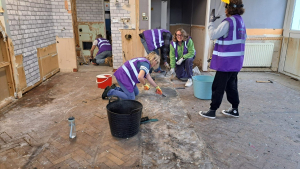
Thank you to everyone who gave up their time and energy on Sunday, to help Footprints Conductive Education Centre move into their new home. A real team effort by trustees, parents of children who used to attend the Centre, the Rotary Club of Nottingham and our very own Alison Brooks. Alison is head of our Clinical Negligence Department and Former Chair of Trustees of Footprints Conductive Education Centre.

Alison Brooks explained that she was first introduced to #conductiveeducation in the 1980s when a client was travelling to the Peto Institute in Hungary, because of a lack of facilities in the UK. Over many decades, Alison’s cerebral palsy clients tell her that without the benefit of #conductiveeducation they would not have achieved their full potential. The difference the Centre makes to the lives of children is immeasurable.

As you can see from the photos, there is still lots to do, but if the enthusiasm of volunteers on Sunday is anything to go by, we hope it will not be long before staff, parents and children are welcomed into the new facilities.

If you can spare some time, please contact Footprints Conductive Education Centre to attend their next volunteer day in Clifton.

Makaton At Christmas

December 23, 2022/in Clinical Negligence News, News, Personal Injury News

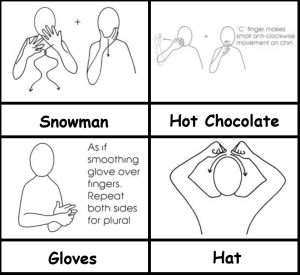
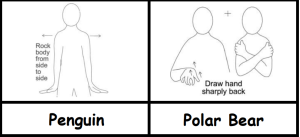
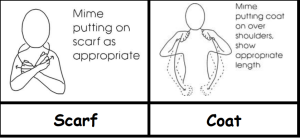
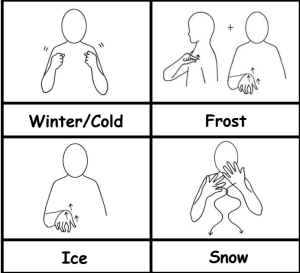
Footprints Conductive Education Centre (CEC) have kindly let us share their Makaton signing for everyone to use at Christmas. It’s a great way to learn some simple words to help communicate with children with special needs. Can you think of any other Christmas words you would like to share?  Why not try games over the holidays to see who can remember the signing? For more information about surviving over Christmas and keeping safe, go to https://www.footprintscec.org/


Pulmonary Embolism – why you need to act quickly.

January 7, 2022/in Clinical Negligence News, Frontpage News, Inquest News, News

In 2018  Paul* contacted Alison Brooks to investigate a claim following the death of his wife, Mary*, in December 2017. She was only 64 years old and had died because of an undiagnosed Pulmonary Embolism (“PE”). This is when a blood clot develops in a pulmonary artery, often when the clot has started as a DVT in the leg. It is easily treatable because anti coagulants are given which break down the blood clot.

Paul knew about Legal 500, an independent legal guide which recommends lawyers in the UK , who are experts. Paul contacted Barratts Solicitors, because we are ranked in the top tier for clinical negligence claims, and asked Alison to help him investigate the death of his wife. He knew that he needed someone with experience to help, as the GP involved in Mary’s care, had denied that he had done anything wrong.

The Facts

In October 2017, Mary had undergone foot surgery and was recovering from the operation but, on 1st December, she began to feel breathless. Paul called the GP surgery and Mary was seen by a doctor who carried out some tests. Despite noting that PE was a possibility, he decided that Mary probably had bronchitis, a condition she had previously suffered from, and prescribed antibiotics.

Mary continued to feel unwell but believed she would soon feel better with the antibiotics. Tragically, in the early hours of 3rd December, Mary collapsed from a huge Pulmonary Embolism. Paul was trained in First Aid and tried to resuscitate his wife, but it was too late, and nothing could be done to save Mary.

The Claim

Paul wanted to ensure that the GP would not make the same mistake again, but the GP did not accept that his assessment of Mary had been negligent. Alison recognised that Paul was also suffering because of the traumatic circumstances of Mary’s death and might be able to claim compensation for his psychiatric illness. This is called a “secondary victim” award and can be hard to prove in medical cases because of restrictions in the law, which limit who can make a claim.

Paul was also suffering financially as he had his own health problems and relied on Mary to look after him. A claim for the support, that Mary would have provided to Paul, was made, as well as an award for her pain and suffering and funeral costs. When someone dies, the Government also sets a fixed amount for bereavement damages. This was £12,890 under the Fatal Accidents Act 1976 for deaths before 1 May 2020.

The Defence

A claim was issued against the GP who saw Mary on 1st December. We argued that the Defendant:

  • Should have carried our further tests for PE, at home or in hospital – the Wells score was developed by NICE (the National Institute for Clinical Excellence) and any result over 4 means a PE is likely; Mary’s score was 4.5.
  • Failed to properly inform Mary and her husband that Pulmonary Embolism was more likely than a chest infection and was potentially fatal if left untreated.
  • Did not follow up with Mary and falsely reassured her by prescribing antibiotics.

The Defendant argued that he did not refer Mary to hospital because she had refused to go in for treatment. A small note in the GP records stated:

Plan; offered admission for PE -patient declined.

The Defendant tried to rely on this entry, but we believed that a Court would not have accepted this defence because:

  • Mary had not refused medical treatment before and it would have been irrational for her to refuse admission to hospital, for a potentially fatal condition, if properly informed.
  • Paul was present during the examination, and the ambulance records showed that he also believed Mary just had a chest infection.
  • A GP with a patient refusing life threatening treatment would have made a very full note to explain the patient’s decision but the Defendant’s note was sparse.
  • If the Defendant was correct, Mary could still have been treated in the Community without going to hospital but the GP did nothing.

The Defence agreed that Mary would have survived if admitted to hospital any time on 1st December. This meant the case would succeed if we could show the GP had not provided a reasonable standard of care.

The GP continued to defend the case but we proposed a settlement meeting in 2021 and were able to settle the case with very little deduction for the risk of losing the case at Trial. This indicated that the Defendant’s advisers probably took a similar view to us about the case.

This has been a very difficult few years for Paul. He will never forget Mary; they were married for 18 years. Paul was disappointed that the GP never admitted any fault for Mary’s death, but he has recovered from his own psychiatric illness and has a new partner. Paul agreed to share this story as he wanted to highlight the risks of DVTs and Pulmonary Embolisms for others, in the hope that someone else recognises the signs and can be treated before it is too late.

*Please note that the clients’ names have been anonymised.

Thirty Years And Continuing….

December 15, 2021/in Clinical Negligence News, News, Personal Injury News

Over thirty years ago, David Tomlinson, Malcolm Goff and Jill Barratt decided to set up a Claimant injury litigation law firm with a difference. Their ambition was to offer a personal service, focused only on injured clients and their needs. This was achieved by ensuring that clients were advised by specialist lawyers who were experienced in claims arising from an accident or due to medical negligence, with the same senior lawyer dealing with the claim from start to finish.

Since it was established, Barratts has been ranked number 1, every year, in the independent legal guides, Legal 500 and Chambers, for our work in the fields of clinical negligence and personal injury.

Ed Myers and Alison Brooks joined over 20 years ago and became partners in the firm, helping to develop the personal injury and clinical negligence departments. Malcolm and Jill retired some years ago but the same ethos of client care from a small, dedicated firm, continued under the leadership of David, Ed and Alison. The firm’s services were expanded to include Court of Protection work for injured clients, as many wanted Barratts to continue to support them once their claim settled.

After decades of hard work by David and Ed, both have decided to retire, opening a new chapter for Barratts.

Alison was determined to continue the unique approach of  Barratts and knew that many clients chose Barratts because it felt more like a family run firm. It therefore made sense that Alison turned to a long standing colleague, Ross Brain, who had worked with Alison in London. Ross is former head of a large claimant clinical negligence department at a London firm. He has also spent time developing his business and management skills through other ventures, which made Ross the ideal candidate to work alongside Alison and all the staff.

Ross and Alison have embraced this opportunity to build on the firm’s reputation, with help from our loyal and experienced staff, many of whom have worked at Barratts for decades. We could not ask for a better team of lawyers and staff; they continue to fight for injured clients and to help them rebuild their lives following injury. We are extremely excited about the future of Barratts and to be able to continue the formidable legacy which started 30 years ago. The partner led service remains a unique part of our approach and, together, we have over 200 years combined experience to draw upon.

We are proud to have been described as one of the best firms in the country for personal injury and clinical negligence work. We would like to thank all our staff over the years, who have helped us to achieve such a remarkable standing for our claimant injury work.


Mental Health After Spinal Cord Injury

December 7, 2021/in Clinical Negligence News, News, Personal Injury News

When someone is told they have a spinal cord injury, they need to come to terms with this psychologically as well as physically. Having a spinal cord injury has been especially hard during Covid and the Spinal Injuries Association (“SIA”) have just produced a report addressing the mental health needs of those affected by spinal cord injury and the additional challenges they face.

The SIA report, titled “It’s Not Just Physical”, involved research by the SIA with the Universities of Reading and Buckingham. The SIA recently had a fundraising event, the Gunpowder Ball, where a video from Donna Tuzul was shown. This is a film about life after Cauda Equina Syndrome and shows how the SIA helped Donna. Our clients have been supported by the SIA; their fantastic mentoring service is provided by others with SCI, who are more able to relate to how the person is feeling, having been through a similar pathway themselves. The SIA counselling service was “phenomenal” for Donna and highlights the importance of addressing mental as well as physical health.

The report also considers feedback from family members as well as those living spinal cord injury.  Did you know that someone with spinal cord injury is 3 times more likely to consider suicide and 47% report mental health problems? Nik Hartley, CEO of the SIA, has called on the Government to do more. The SIA is asking “the NHS, government and other health policy makers to provide better mental health support services for SCI people – and their unpaid carers – as a matter of urgency.”

Nik Hartley, SIA’s CEO highlighted:

“We are at risk of failing thousands of people in the UK living with a spinal cord injury. Our new report highlights that psychological damage caused by a SCI is, at best, considered as an afterthought, and at worst, completely ignored by the medical profession. We need urgent action and for services to be sufficiently specialised to support the thousands of people living with this type of injury before it is too late.”

For more news about this important research on the mental impact of living with spinal cord injury, read:

https://www.spinal.co.uk/news/not-just-physical/

Barratts are proud to be recognised by the SIA as specialist spinal cord injury solicitors, with expertise in helping people make claims after accidental spinal injury or negligence. For over 30 years we have acted for clients with SCI including missed cases of Cauda Equina Syndrome, road traffic accidents and accidents at work. If you need advice about SCI and think you may have a claim for clinical negligence or personal injury please contact our specialist teams.

NHS EARLY NOTIFICATION SCHEME FOR BIRTH INJURIES

July 22, 2021/in Clinical Negligence News, Uncategorized


Exterior of NHS building

In April 2017 the NHS launched the NHS Early Notification Scheme (ENS) to deal with investigations in relation to serious brain injuries suffered by babies at birth. The scheme is designed to speed up investigations to determine whether or not a baby is entitled to receive compensation. It was also set up to ensure that lessons are learned to improve maternity care and avoid future avoidable cases of babies with brain injury. The scheme aims to make maternity and neonatal services safer and to encourage openness and honesty on the part of Hospital Trusts. Read more

“Devastating Evidence” From Families at Inquests

May 27, 2021/in Clinical Negligence News, News, Personal Injury News

If you lost a loved one and had to represent your family at an Inquest it would be extremely stressful, and how would you know what to say and do? It’s even harder to imagine coping with this if the Inquest is covering a major incident involving multiple deaths. In almost every Inquest in these situations, there will be numerous barristers and solicitors representing the State or Company involved in the deaths. Before he retired, our Personal Injury Solicitor, Ed Myers, faced this when he represented clients in the Marchioness disaster and terrorist attacks, such as the Soho bombing. Read more

Nottingham Maternity Services “Inadequate”

December 9, 2020/in Clinical Negligence News, Inquest News, News

The Care Quality Commission have downgraded Nottingham Maternity Services to “inadequate” following an unannounced inspection at the Queens Medical Centre and Nottingham City Hospital.  The inspection concluded that some staff  “did not always understand how to keep women and babies safe“.  Many of the problems arose due to staffing shortages or lack of training.  The Hospital Trust have subsequently confirmed that they are recruiting extra midwives. Read more

Page 1 of 212

News

  • Maternity Safety in England: What National Investigations Show and What Families Need to KnowDecember 11, 2025 - 12:15 pm
  • Alison Brooks joins The Legal 500 Hall of FameNovember 7, 2025 - 6:07 pm
  • Work Begins on new premises for Footprints Conductive Education CentreNovember 4, 2024 - 5:51 pm
  • Disabled boy in a wheelchair on the beach
    Makaton At ChristmasDecember 23, 2022 - 3:15 pm
  • Legal advice
    Pulmonary Embolism – why you need to act quickly.January 7, 2022 - 10:56 am
  • Straight road with future dates
    Thirty Years And Continuing….December 15, 2021 - 11:07 pm
  • Spinal injury or pain
    Mental Health After Spinal Cord InjuryDecember 7, 2021 - 11:38 am
  • Disabled boy in a wheelchair on the beach
    NHS EARLY NOTIFICATION SCHEME FOR BIRTH INJURIESJuly 22, 2021 - 6:17 pm
  • Barratts solicitors news
    “Devastating Evidence” From Families at InquestsMay 27, 2021 - 2:38 pm
  • Disabled boy in a wheelchair on the beach
    Nottingham Maternity Services “Inadequate”December 9, 2020 - 7:51 pm
  • Girl living with spinal cord injury needs a wheelchair in a car
    Living With Spinal Cord InjuryNovember 18, 2020 - 6:33 pm
  • Nottingham Coroner's Court
    Missed Chances To Save Diabetic PatientNovember 12, 2020 - 5:08 pm
  • Signpost to help, support, advice, guidance
    Costs At Inquest RecoveredSeptember 29, 2020 - 5:26 pm
  • injury prevention week - car reversing lights awareness campaign
    APIL’s Pedestrian Safety CampaignAugust 7, 2020 - 10:03 am
  • Floating £ pound signs
    Bereavement Damages IncreasedMay 19, 2020 - 3:34 pm
  • Signpost to help, support, advice, guidance
    TRAUMATIC BRAIN INJURY FOLLOWING A CAR ACCIDENTMay 13, 2020 - 1:01 pm
  • Girl living with spinal cord injury needs a wheelchair in a car
    Transport For Older SEN PupilsApril 17, 2020 - 10:06 am
  • Exterior of NHS building
    The Cost of Medical NegligenceJanuary 21, 2020 - 4:39 pm
  • Straight road with future dates
    Accidents in Europe After BrexitMarch 12, 2019 - 2:03 pm
  • Legal advice
    Extending Legal Aid for Inquest Costs RejectedFebruary 20, 2019 - 9:47 am
AvMA accredited
Legal 500 leading firm
Head Injury Solicitor
 
Clinical Negligence Accreditation
AVMA Panel
APIL accredited practice

Barratts

Click the below links for details of:
Legal Notices
Terms of Business
Interest Policy
Cookie Policy
Complaints Policy

Barratt Goff & Tomlinson Limited, trading as Barratts Solicitors, are authorised and regulated by the Solicitors Regulation Authority
No. 524015
Copyright Barratt Goff & Tomlinson Limited 2017

Opening Hours

Mo-Th: 9:00-17:00
Fr: 9.00-16.00

Out of hours appointments are also available

mail@barratts.legal

Tel: 0115 931 5171

© Barratts Solicitors
  • Twitter
  • Mail
  • Facebook
Scroll to top